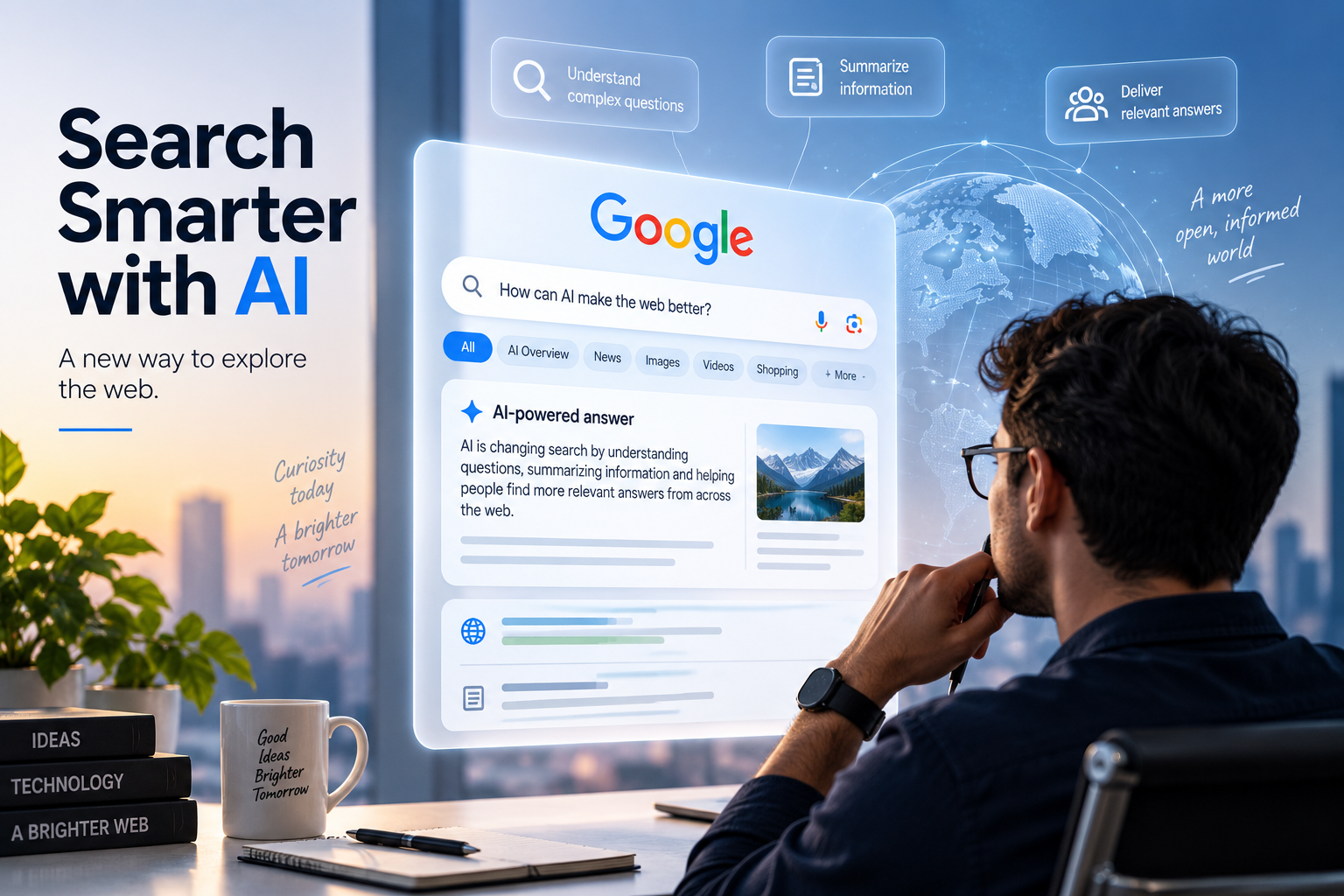
AI-powered search is changing how people find information online. Instead of typing a few keywords into Google and opening several links, people are increasingly asking longer, more specific questions and expecting direct answers.
The growth of artificial intelligence is pushing search engines in this direction. AI can understand the context behind a question, summarize information and help users find relevant answers without requiring them to visit multiple websites.
For users, this could make finding information faster. For businesses and publishers, however, it also raises an important question: how will people discover websites in an AI-powered search environment?
AI is changing the way people search
For years, search engines have mainly worked around keywords and links. A user enters a query, receives a list of results and decides which websites to open.
AI-powered search is changing that experience.
Users can now ask questions in a more natural way and receive answers that bring information from different sources together. Instead of searching several times to understand a topic, someone can ask one detailed question and continue the conversation based on the answer.
This doesn’t mean traditional search is disappearing. But the way people interact with search is clearly evolving.
Why technology companies are investing in AI search
AI has become one of the biggest areas of competition in the technology industry. Search companies and AI developers are working on ways to make search more useful, conversational and personalized.
The goal is not simply to return a list of websites. Modern search experiences are increasingly focused on understanding what the user actually wants and presenting information in a more useful format.
This competition could have a major impact on how people discover information, products and services online. OpenAI also highlights how AI-powered search can provide timely information from the web while linking users to relevant sources.
What AI search means for businesses
The changes in search are important for businesses of all sizes.
A company may have a well-designed website and strong search rankings today, but future customers could discover its products or services through an AI-generated answer instead of clicking a traditional search result.
That makes useful and trustworthy content more important than ever.
Businesses should focus on answering real customer questions, providing accurate information and maintaining a strong online presence. Clear website content, relevant topics and a consistent brand can all help businesses remain visible as search continues to evolve.
What about websites and publishers?
The shift toward AI-powered search could be more complicated for publishers.
Traditionally, a website could attract visitors by ranking for specific keywords on search engines. If users begin getting more information directly from AI-generated answers, some websites could see changes in their organic traffic.
At the same time, websites that produce reliable and original information may have new opportunities to become sources for AI-powered search systems.
This means publishers will need to think beyond traditional keyword optimization. Original reporting, useful analysis and genuinely helpful content could become increasingly valuable.
The future of AI-powered search
AI-powered search is still developing, so it is difficult to predict exactly what the web will look like several years from now.
What is already clear is that search is becoming more conversational. People want faster answers, better context and less time spent sorting through irrelevant information.
For technology companies, this creates a major opportunity to reshape how people find information online.
For businesses and publishers, it is a signal to start adapting now.
The future of search may not be about choosing between links and AI-generated answers. Instead, the two could increasingly work together to help users find better information faster.
If you’re interested in how people can use online tools to research financial markets, you can also read our guide to the NSE IPO 2026.