OpenAI Unveils New AI Tools as Businesses Accelerate Adoption
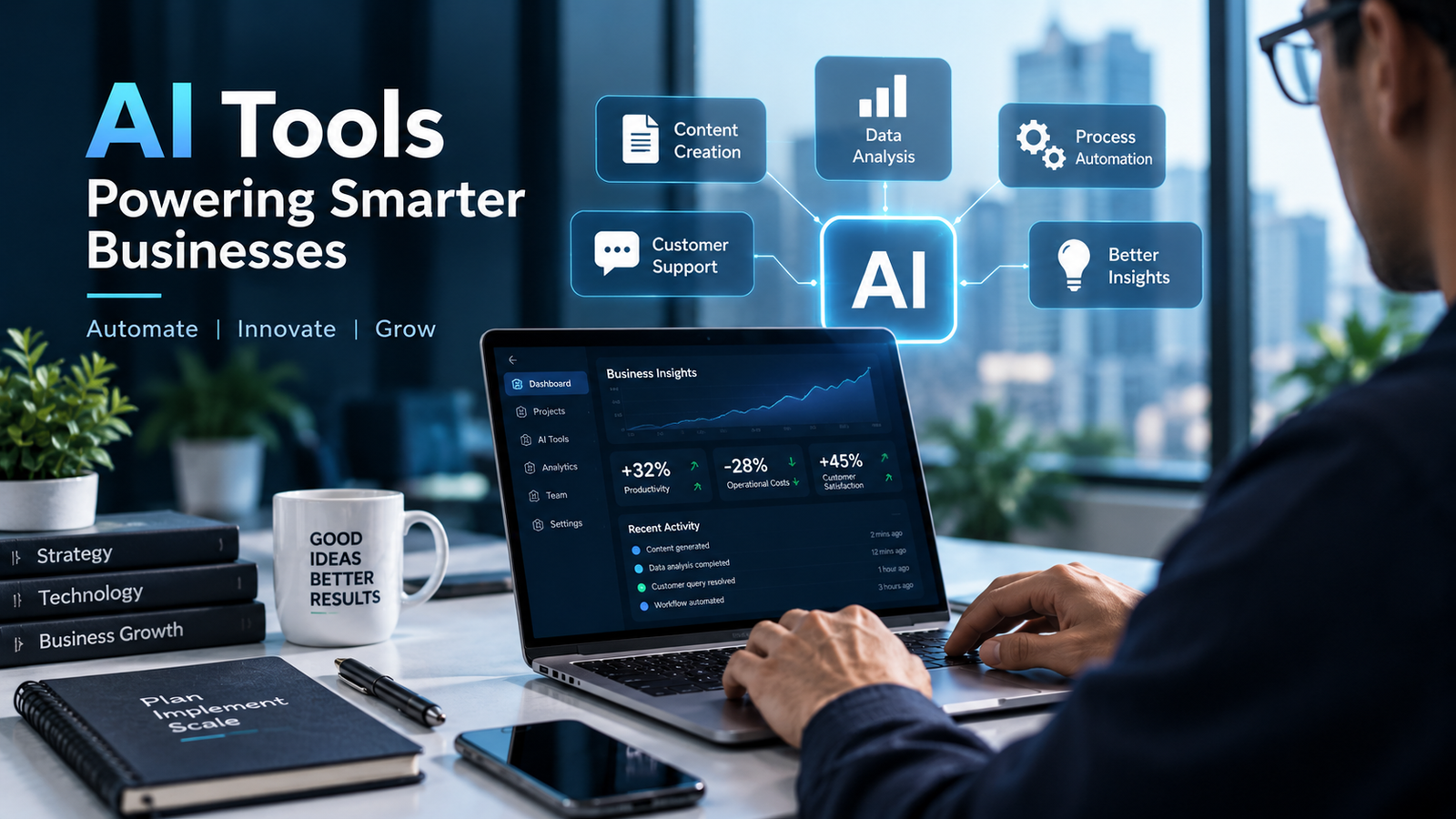
AI tools are becoming part of everyday business operations, moving beyond simple experiments and into areas such as research, data analysis, customer support, software development and workflow automation. OpenAI is expanding its business-focused AI offerings as companies look for practical ways to use these capabilities across different teams.
The shift is also being driven by improvements in AI models and the tools built around them. OpenAI says its latest business products are designed to help teams work with company information, connect existing tools and automate parts of their day-to-day work, while newer models are extending what AI can handle in areas such as coding, research and professional tasks.
OpenAI AI Tools in 2026: What Businesses Are Actually Getting
OpenAI’s business-focused tools are increasingly moving beyond simple chat. Companies can use AI across research, coding, data analysis, content creation and workflow support, while newer agent-oriented systems are designed to work with tools and business context.
For businesses, the interesting question isn’t simply which AI model is most powerful. It’s whether a tool can fit into an existing workflow and produce a measurable improvement in productivity, speed or decision-making.
What’s changing for businesses
Businesses are increasingly using AI to handle customer support, analyze data, generate content and automate repetitive workflows. The shift is no longer limited to large technology companies, with smaller businesses also adopting AI-powered tools to reduce costs and improve efficiency.
For many organizations, the biggest opportunity is not replacing employees but helping them work faster. AI can assist with research, writing, coding, forecasting and decision-making, while employees remain responsible for reviewing outputs and making final decisions.
The companies gaining the most from this shift are those that combine AI adoption with clear business goals. Instead of adding AI simply because it is trending, successful teams are focusing on practical use cases that deliver measurable improvements in productivity, customer experience and revenue.
Where Businesses Are Using AI Tools
AI tools are becoming useful across a much wider range of business functions. Companies can use them to research information, summarize documents, analyze data, prepare reports, support customers and assist employees with routine work.
For sales and marketing teams, AI can help with customer research, content creation and personalized communication. Finance teams can use AI to support analysis, reporting and forecasting, while engineering teams can use AI for coding, debugging and documentation. These uses are making AI less of a standalone experiment and more of a practical layer across everyday business operations.
The bigger change is that businesses are starting to connect AI with the systems and information they already use. This allows AI to support complete workflows instead of simply answering individual questions. OpenAI has highlighted this shift toward AI-assisted and agent-based workflows as businesses move from experimentation toward more practical execution.
AI Is Moving From Experiments to Everyday Work
For many companies, the next stage of AI adoption is not simply testing a chatbot. Businesses are looking at how AI can become part of regular workflows, from researching information and preparing documents to analyzing data and supporting software development. This shift can make AI more useful because employees can apply it to tasks they already perform rather than treating it as a separate technology experiment.
OpenAI is also pushing this direction through products designed for business work, including ChatGPT Work, Codex and connected plugins. Its business platform highlights use cases across finance, data analytics, sales, marketing, operations and engineering.What This Means for Businesses
What This Means for Businesses
The growing use of AI does not mean every company needs to replace existing systems or automate every task. In many cases, the more practical approach is to identify specific areas where AI can reduce repetitive work, improve access to information or help employees make better decisions.
The value will also depend on how businesses implement these tools. Data quality, security, employee training and human oversight remain important as companies bring AI into more sensitive workflows. OpenAI’s business platform, for example, highlights applications across finance, data analytics, sales, marketing, operations and engineering, showing how AI adoption is expanding beyond a single department.
Why AI adoption is accelerating
The rapid improvement of AI models, wider availability of AI software and growing pressure to operate efficiently are all contributing to faster adoption. Businesses can now access tools that were previously expensive or difficult to build, making AI more accessible across departments.
What businesses should consider
Businesses should evaluate AI tools based on security, accuracy, cost and how well they fit existing workflows. Human oversight remains important, particularly when AI is used for customer information, financial decisions or other sensitive business processes.
For more insights into how AI is changing online information and search, read our guide on AI-powered search and the future of the web.